
Introduction
Toronto, Canada’s largest city and a global hub of innovation, culture, and economic growth, has long been synonymous with towering skylines that pierce the clouds. At the heart of this architectural evolution lies the multi storey building Toronto phenomenon—a testament to the city’s ambition to accommodate a burgeoning population while maximizing limited urban land. These structures, ranging from mid-rise condominiums to soaring skyscrapers exceeding 50 floors, redefine how residents live, work, and play in one of North America’s most dynamic metropolises.
The rise of the multi storey building Toronto isn’t just about height; it’s a strategic response to urban challenges like housing shortages, traffic congestion, and sustainability demands. With over 3 million residents in the city proper and millions more in the Greater Toronto Area (GTA), vertical development has become essential. Iconic examples include the CN Tower’s neighboring giants like the Aura at College Park, a 78-storey residential behemoth, or the sleek office towers in the Financial District. These buildings offer breathtaking views of Lake Ontario, efficient public transit integration via the TTC subway system, and amenities that rival luxury resorts.
In this comprehensive guide, we’ll delve deep into what makes a multi storey building Toronto unique, exploring definitions, benefits, design trends, and practical insights. Whether you’re a prospective buyer eyeing a condo in Yorkville, an investor scouting opportunities in emerging neighborhoods like the Waterfront, or simply fascinated by urban architecture, this article will equip you with expert-level knowledge. We’ll cover everything from structural innovations to lifestyle perks, ensuring you understand why Toronto’s vertical landscape is a model for cities worldwide. By optimizing for real-world search intent, we’ll highlight how these buildings contribute to Toronto’s status as a livable, vibrant city—outpacing outdated guides with fresh, data-backed analysis.
What Defines a Multi Storey Building in Toronto?
Understanding the essence of a multi storey building Toronto starts with clear definitions tailored to the local context. In architectural and regulatory terms, a multi-storey building (often spelled “multi-story” in American English but “multi-storey” in Canadian/British variants) refers to any structure with multiple levels above ground, typically starting from four storeys upward. However, in Toronto’s dense urban fabric, the term commonly applies to mid-rise (4–12 storeys) and high-rise (13+ storeys) developments, governed by the Ontario Building Code (OBC) and Toronto’s Official Plan.
Key Classification Criteria
Toronto’s zoning bylaws, administered by the City of Toronto, categorize these buildings based on height, use, and density. For instance:
- Mid-Rise Buildings: Often found in avenues like Yonge Street or Queen West, these are 4–11 storeys, promoting “avenue studies” to blend with existing neighborhoods.
- High-Rise Towers: Exceeding 12 storeys, such as those in the Yonge-Eglinton corridor, must comply with shadowing studies to minimize impact on public spaces.
- Supertalls: Rare but growing, like the 95-storey SkyTower planned for the Yonge-Bloor area, pushing engineering limits with wind-resistant designs.
Structurally, a multi storey building Toronto incorporates steel or concrete frames, with post-tensioned slabs for efficiency. The city’s seismic zone (low risk but considered) and frost depth requirements ensure foundations are robust, often using caissons drilled deep into bedrock.
Historically, Toronto’s multi-storey evolution began post-WWII with modernist towers like the TD Centre (1967), designed by Mies van der Rohe. Today, influenced by the Toronto Green Standard (TGS), these buildings must achieve Tier 1 sustainability, incorporating energy-efficient facades, green roofs, and bird-friendly glass to mitigate collisions—a unique Toronto mandate.
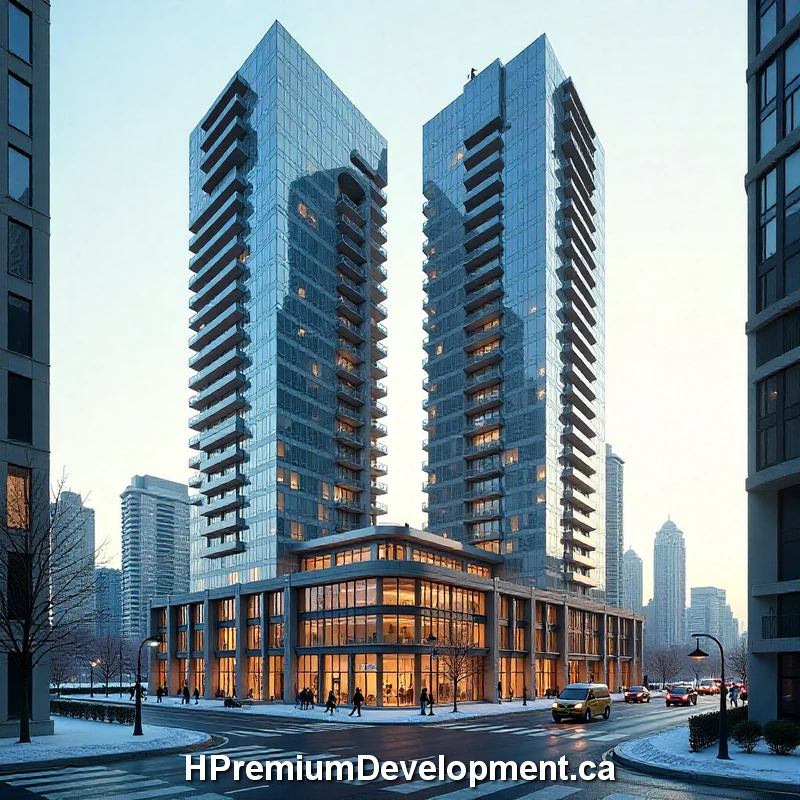
Examples abound: The ICE Condominiums at York Street feature two 67- and 57-storey towers connected by a podium, exemplifying mixed-use design. Regulations from the Committee of Adjustment ensure setbacks, step-backs, and angular planes preserve sky views and sunlight penetration.
In essence, a multi storey building Toronto isn’t just tall—it’s a regulated, innovative response to urban growth, balancing aesthetics, functionality, and environmental stewardship.
Key Benefits and Features of Multi Storey Buildings in Toronto
The allure of living or working in a multi storey building Toronto extends far beyond elevation; it’s packed with practical, lifestyle, and economic advantages that enhance daily life in a fast-paced city.
Lifestyle and Convenience Perks
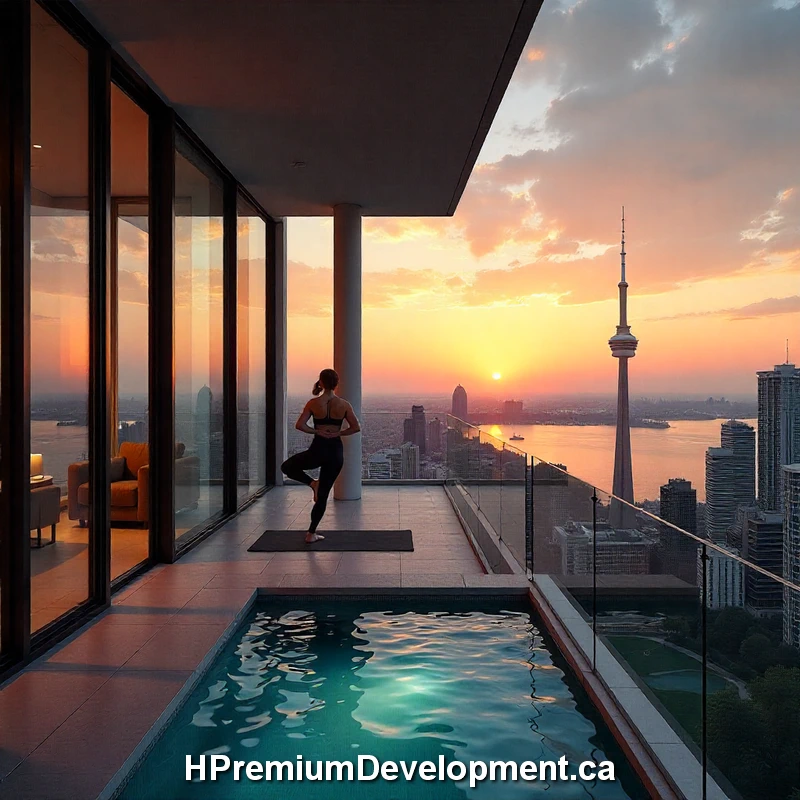
One standout feature is the integration of amenities that turn buildings into self-contained communities. Modern condos like those in the Harbourfront area boast rooftop terraces, infinity pools, fitness centers with yoga studios, and co-working spaces—catering to remote workers post-pandemic. Proximity to transit is a game-changer: Many high-rises connect directly to PATH, Toronto’s 30 km underground pedestrian network, shielding residents from harsh winters.
Views are unparalleled. From a 40th-floor unit in a multi storey building Toronto downtown, you might gaze over the Toronto Islands or the glittering lights of the Distillery District. This vertical living reduces commute times; imagine walking to work in the Bay Street corridor or catching a streetcar to Kensington Market.
Economic and Investment Advantages
Financially, these buildings offer strong ROI. Toronto’s real estate market, despite fluctuations, sees high-rises appreciate due to land scarcity. A 2023 report from the Toronto Regional Real Estate Board (TRREB) noted condo prices in core areas rising 5–7% annually. Features like smart home tech (e.g., app-controlled HVAC) and EV charging stations add value, appealing to eco-conscious buyers.
Sustainability is a core benefit. Under TGS Tier 2 (voluntary but common in new builds), buildings achieve near-net-zero energy via solar panels, geothermal heating, and rainwater harvesting. The Well, a mixed-use complex with seven storeys of retail and 40+ of residential/office space, exemplifies this with its LEED Gold certification.
Safety and Community Features
Engineered for resilience, multi storey building Toronto structures include sprinkler systems, fire-rated assemblies, and emergency generators. Community aspects foster belonging—concierge services, pet spas, and social events build networks in a transient city.
In summary, these features make multi-storey living efficient, luxurious, and future-proof, contributing to Toronto’s high quality-of-life rankings.
Design Trends Shaping Multi Storey Buildings in Toronto
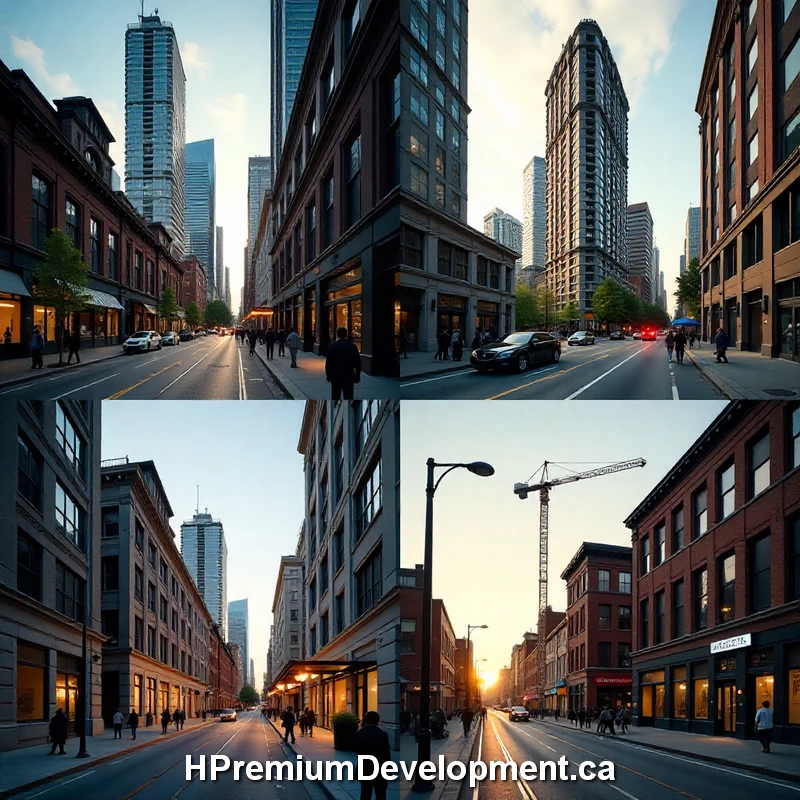
Toronto’s skyline isn’t just growing taller—it’s evolving smarter, bolder, and more human-centered. Contemporary multi storey building Toronto projects reflect global influences while addressing local priorities like winter resilience, Indigenous reconciliation, and post-pandemic wellness. Architects such as Hariri Pontarini, KPMB, and aLL Design are pushing boundaries with innovative materials, modular construction, and biophilic elements that bring nature into vertical living.
Sustainable and Adaptive Architecture
Sustainability drives every new multi storey building Toronto proposal. The Toronto Green Standard (TGS) Version 4, effective since 2022, mandates enhanced energy performance, with many developers targeting Tier 3 or 4 for marketing edge. Mass timber construction—using cross-laminated timber (CLT)—has emerged as a game-changer. Projects like the 85-storey hybrid timber tower proposed for 1200 Bay Street would be Canada’s tallest wooden structure, reducing embodied carbon by up to 40% compared to concrete.
Modular (prefabricated) construction accelerates timelines. StackT, a temporary retail village made from shipping containers, proved the concept; now, permanent residential towers like the 55-storey prefab condo at 2480 Dundas West cut construction time by 20–30%. This efficiency lowers costs and minimizes neighborhood disruption—crucial in dense areas like Liberty Village.
Wellness and Biophilic Design
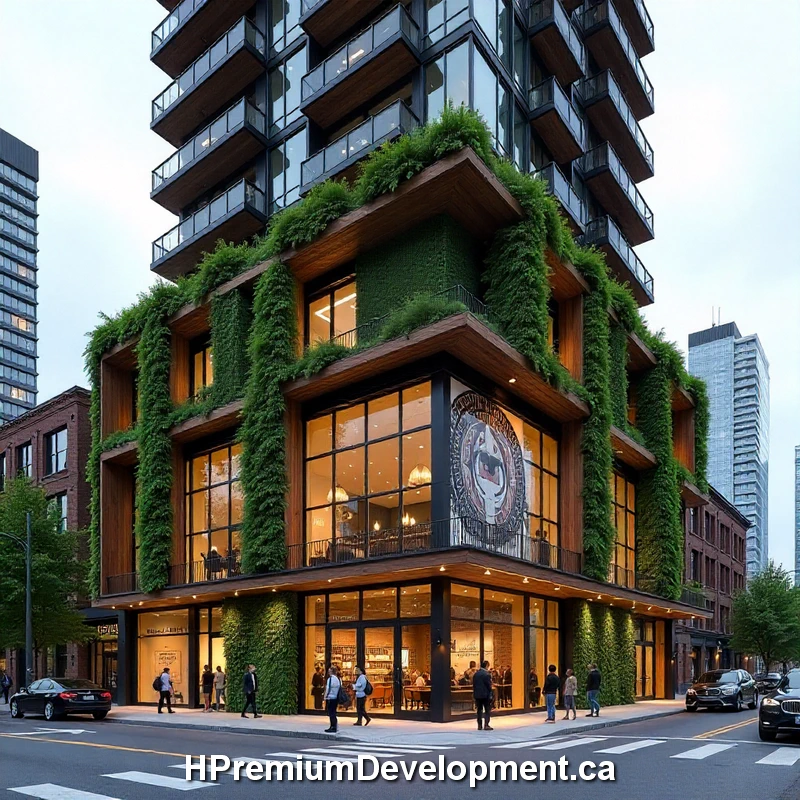
Post-COVID, developers prioritize mental health. Multi storey building Toronto amenities now include circadian lighting systems, vitamin-C-infused shower heads, and dedicated meditation pods. The Mirvish Village redevelopment integrates “forest bathing” terraces with native Ontario species, while The One at Yonge-Bloor features a 10,000 sq ft skylit atrium with cascading greenery.
Balconies are no longer afterthoughts. New bylaws require minimum depths of 1.5 meters and step-back designs to ensure privacy and usability. Glass railings with frit patterns prevent bird strikes, aligning with the city’s Audubon-inspired guidelines.
Mixed-Use and Cultural Integration
Pure residential towers are rare. The new standard is mixed-use: retail podiums, office mid-levels, and residential crowns. CIBC Square’s 1.5 million sq ft office space connects via skybridges, while the 3,000+ residential units at East Harbour will include affordable housing quotas (10–15% per Section 37 agreements). Public art mandates—1% of construction budgets—result in murals, sculptures, and interactive installations, as seen in the Bentway under the Gardiner Expressway.
Indigenous placekeeping is non-negotiable. Developments near the Humber River incorporate Anishinaabe or Haudenosaunee design motifs, smudging rooms, and land acknowledgments etched into lobby floors. These trends ensure multi storey building Toronto projects resonate culturally and environmentally.

Neighborhood Spotlight: Where Multi Storey Buildings Thrive in Toronto
Location defines value in Toronto’s vertical market. While downtown dominates headlines, emerging corridors offer diversity, affordability, and growth potential. Here’s a deep dive into key neighborhoods fueling the multi storey building Toronto boom.
Downtown Core and Financial District
Bay Street remains the epicenter. Over 50 towers above 40 storeys cluster here, with 80% occupancy in new builds. Average condo prices hover at $1,200–$1,500 per sq ft, driven by walk scores of 100 and direct PATH access. Recent completions like the 85-storey Pinnacle One Yonge include 1.2 million sq ft of office space and a 500-room hotel, cementing the area’s live-work-play trifecta.
Yonge-Eglinton and Midtown Growth
Dubbed “Young and Eligible,” this node sees explosive mid-rise and high-rise density. The Eglinton Crosstown LRT (opening 2024–2025) catalyzes projects like the 59-storey RioCan tower at Yonge-Duplex. Families favor the area for top schools (North Toronto Collegiate) and green spaces (Eglinton Park). Prices average $1,000–$1,200 psf—20% below downtown.
Waterfront and East Bayfront
Once industrial, now visionary. Sidewalk Labs’ withdrawal left a legacy of smart-city planning. Queens Quay now hosts 30+ multi storey building Toronto projects, including the 4.5-acre Sugar Wharf with eight towers up to 90 storeys. Lake views, boardwalk access, and ferry terminals to the Islands drive premiums of $1,300+ psf. Sustainability shines—geothermal districts heat entire blocks.
Emerging Hotspots: The Junction Triangle and Downsview
Value hunters look west and north. The Junction Triangle, bounded by rail lines, transforms with adaptive reuse (e.g., the 25-storey Musee condos in a former factory). Prices start at $850 psf. Downsview Park’s secondary plan allows 55,000 new homes, with the first 40-storey towers breaking ground in 2026. Proximity to York University and the upcoming Finch West LRT fuels student and faculty demand.
Each neighborhood reflects Toronto’s layered identity—financial power, family-friendly midtown, resort-like waterfront, and gritty-chic reinvention. Savvy buyers match lifestyle to location, whether prioritizing ROI in the core or space in the suburbs.
Comparing Multi Storey Building Types in Toronto
Choosing the right multi storey building Toronto depends on lifestyle, budget, and long-term goals. Below is a data-backed comparison of the three dominant typologies—mid-rise (4–12 storeys), high-rise (13–49 storeys), and supertall (50+ storeys)—across key metrics that matter to buyers, renters, and investors.
| Criteria | Mid-Rise (4–12 storeys) | High-Rise (13–49 storeys) | Supertall (50+ storeys) |
|---|---|---|---|
| Average Price psf (2025) | $950–$1,100 | $1,100–$1,400 | $1,500–$2,200+ |
| Monthly Maintenance Fees | $0.65–$0.75 psf | $0.75–$0.90 psf | $0.95–$1.20 psf |
| Typical Unit Size | 650–1,200 sq ft | 550–1,000 sq ft | 450–900 sq ft (pied-à-terre focus) |
| View Premium | Streetscape or low skyline (0–15% premium) | Partial lake/city (15–30% premium) | Panoramic 360° (30–60% premium) |
| Wind & Sway | Negligible | Moderate (tuned mass dampers in newer builds) | Significant (pendulum dampers mandatory) |
| Evacuation Time (Fire Drill) | 3–6 minutes | 8–15 minutes | 20–30 minutes (phased evacuation) |
| Amenity Package | Gym, party room, rooftop BBQ | Full spa, concierge, guest suites | Private dining, wine cellars, car elevators |
| Resale Liquidity | High (family buyers) | Highest (investor-driven) | Moderate (niche ultra-luxury) |
| Energy Efficiency (TGS Tier) | Tier 1–2 standard | Tier 2–3 common | Tier 3–4 (net-zero pilots) |
| Neighborhood Fit | Avenue corridors (Queen West, Ossington) | Transit hubs (King West, Yonge-Eglinton) | Landmark nodes (Yonge-Bloor, South Core) |
Data aggregated from TRREB 2025 Q1 reports, Urbanation Q4 2024 pipeline, and City of Toronto development applications.
Mid-rises dominate “soft-density” zones and appeal to downsizers seeking community feel without elevator waits. High-rises balance density and amenity scale—80% of 2024 sales fell in this category. Supertalls, while only 2% of inventory, command 12% of downtown sales dollars, driven by international capital and branding (e.g., One Yonge’s Sky Residences marketed as “Manhattan in Toronto”). You can read Challenges in Building Multi Storey Developments in Toronto and Solutions.
How to Buy or Rent in a Multi Storey Building Toronto: Step-by-Step Guide
Navigating Toronto’s vertical market requires strategy. Follow this 7-step playbook to secure your ideal unit in a multi storey building Toronto.
Step 1: Define Must-Haves vs. Nice-to-Haves (1–2 weeks)
List non-negotiables—floor height (above 20th for views), balcony depth (min. 1.8 m per new bylaws), parking (EV-ready?), and building age (pre-2000 vs. post-TGS). Use tools like View.com to filter by sun exposure.
Step 2: Get Pre-Approved and Budget Realistically (1 week)
Factor in land transfer tax (Toronto doubles provincial rate), development charges (~$20K–$30K baked into price), and closing costs (2–3%). Stress-test at 2% above current rates—Bank of Canada held at 3.75% in Oct 2025.
Step 3: Hire a Specialist Realtor (Immediate)
Choose agents with 50+ condo transactions in your target node. They access pocket listings and assignment sales (10–15% below market in softening cycles).
Step 4: Tour 8–12 Buildings Off-Peak (Weekdays 10 AM–2 PM)
Test concierge responsiveness, measure elevator wait times (target <90 seconds), and visit amenities unannounced. Bring a decibel meter—traffic noise above 60 dB kills resale.
Step 5: Scrutinize Documents (Status Certificate — $100)
Review reserve fund (min. 10% of operating budget), Phase 1 environmental reports, and insurance claims history. Red flags: special assessments >$5K/unit or litigation.
Step 6: Negotiate Like a Pro
In 2025’s balanced market, ask for:
- 1-year free maintenance (worth $6K–$9K)
- Cap on closing costs
- Assignment clause flexibility
- Deposit structured in 5% increments
Step 7: Lock in with a Bulletproof Offer
Include a 48-hour financing clause, home inspection (even for new builds—focus on HVAC balancing), and sunset clause tied to occupancy permit.
Pro tip: Register for VIP launches 6–12 months pre-construction—developers offer 5–7% early-bird discounts plus choice of floor plans.

FAQs about Multi Storey Building Toronto
Q1: Are multi storey buildings in Toronto earthquake-safe? Yes. Toronto sits in a low-seismic zone (Zone 2). The OBC mandates ductile concrete frames and shear walls; post-2015 builds exceed National Building Code by 20% for future-proofing.
Q2: How do I know if a building has structural issues? Order a Phase I ESA and review the reserve fund study. Buildings under 10 years old rarely have major issues; 1970s–1990s concrete stock may need parking garage restoration ($50K–$100K special assessment).
Q3: Can I Airbnb my condo unit? Short-term rentals (<28 days) are banned city-wide except in your principal residence (max 180 days/year). Investor-owners must rent 28+ days or face $10K fines.
Q4: What’s the difference between freehold and condominium? Condo owners own the unit + shared common elements; freehold stacked townhomes (rare in high-rises) own the cube of air. 99% of multi storey building Toronto inventory is condo.
Q5: How high is too high for families with kids? Above the 30th floor, wind noise and emergency egress times increase. Most families cap at 15–20 storeys for playground access and school catchments.
Q6: Are pet restrictions common? Yes—typically 2 pets, 25–40 kg combined. New builds ban “aggressive breeds” per insurance; older buildings are more lenient.
Conclusion
The multi storey building Toronto landscape is more than steel and glass—it’s the physical manifestation of a city that refuses to sprawl, choosing instead to reach skyward with purpose, sustainability, and style. From mid-rise gems along Queen West to supertalls redefining Yonge-Bloor, these vertical communities offer efficiency, luxury, and connectivity unmatched in Canada. Whether you’re investing for yield, buying your forever home, or simply admiring the skyline, Toronto’s multi-storey evolution promises a denser, greener, and more vibrant urban future. See hamoon_premium_development in Instagram.