
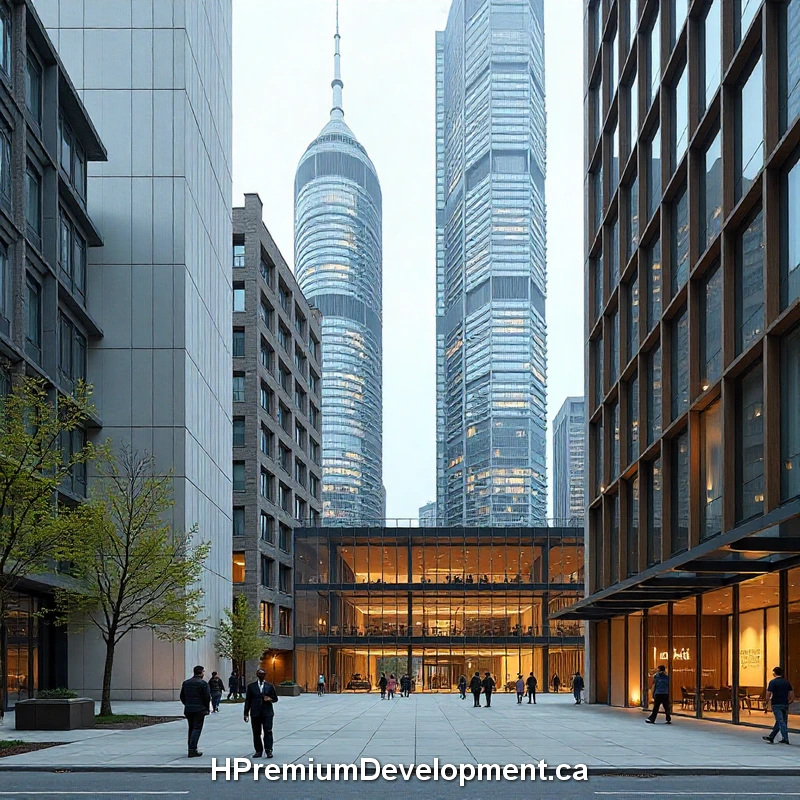
In the heart of Canada, where the CN Tower pierces the sky like a beacon of ambition, Toronto stands as a testament to relentless urban evolution. High rise development in Toronto has become synonymous with the city’s unyielding spirit, turning a once-modest lakeside settlement into a global metropolis boasting one of North America’s most dynamic skylines. As of 2025, with over 1,000 high-rise buildings dotting the horizon—more than any other city in the country—Toronto’s vertical growth isn’t just about stacking floors.
It’s a strategic response to population booms, housing shortages, and the demand for innovative living spaces. From the gleaming glass facades of the Financial District to the eco-conscious towers rising in waterfront communities, high rise development in Toronto is redefining what it means to live, work, and thrive in a modern city.
What drives this surge? Toronto’s population has swelled to nearly 3 million in the urban core, fueled by immigration, tech innovation, and a post-pandemic shift toward hybrid lifestyles. Developers are racing to meet the need for affordable yet luxurious residences, commercial hubs, and mixed-use spaces that blend residential, retail, and recreational elements. Yet, this boom comes with layers of complexity: zoning battles, environmental concerns, and the delicate balance between preserving heritage and embracing the future. High rise development in Toronto isn’t merely construction—it’s a narrative of resilience, where steel and concrete sculpt a skyline that reflects diversity, sustainability, and economic vitality.
Imagine waking up to panoramic views of Lake Ontario from a 50th-floor condo, or commuting via high-speed elevators to buzzing co-working lounges below. This is the promise of Toronto’s high rises, but it’s also a call to action for policymakers, architects, and residents to ensure growth benefits all. In this comprehensive guide, we’ll dive deep into the world of high rise development in Toronto, exploring its foundations, advantages, and the trends shaping tomorrow.
Whether you’re a prospective buyer eyeing luxury condos, an investor scouting opportunities, or a city enthusiast curious about urban transformation, understanding this phenomenon is key to appreciating Toronto’s trajectory. As we unpack the intricacies, from historical roots to cutting-edge innovations, prepare to see the city anew—towering, bold, and endlessly evolving.
Understanding High Rise Development in Toronto: A Historical and Structural Overview
The Roots of Toronto’s Vertical Ambition
High rise development in Toronto traces its origins to the late 19th century, when the city first flirted with multi-story buildings amid rapid industrialization. The Gooderham Building, erected in 1892 as a modest five-story warehouse, marked an early milestone, but it was the post-World War II era that ignited true vertical fervor. With economic prosperity and a growing workforce, developers like Trizec and Campeau began experimenting with steel-frame constructions, culminating in icons like the Toronto-Dominion Centre in the 1960s—a cluster of Mies van der Rohe-designed towers that introduced modernism to the skyline.
By the 1980s, high rise development in Toronto accelerated with the condo boom, driven by land scarcity and federal incentives for urban densification. Today, the city’s Official Plan mandates intensification in key growth areas, such as the downtown core and Yonge-Eglinton corridor, where over 200 new towers are in various stages of planning or construction. Structurally, these buildings leverage advanced engineering: post-tensioned concrete cores for stability, curtain wall systems for energy-efficient glazing, and seismic dampers to withstand Ontario’s occasional tremors. The average high rise here exceeds 20 stories, with supertalls like The One at 85 floors pushing boundaries.
Key Players and Regulatory Framework
Behind the cranes and concrete pours are titans like Menkes Developments, Tridel, and Daniels Corporation, who navigate a web of regulations from the City of Toronto’s planning department. Zoning bylaws, such as those under the Planning Act, cap heights in heritage zones while encouraging 40+ story builds in transit-oriented developments. Environmental assessments via the Ontario Ministry of the Environment ensure minimal ecological impact, mandating green roofs and bird-friendly glass. This framework not only fosters innovation but also addresses equity—recent policies like the Inclusionary Zoning Bylaw require 10% affordable units in new high rises, democratizing access to elevated living.
In essence, high rise development in Toronto is a symphony of history, policy, and technology, where each new tower builds on the last, creating a layered urban tapestry that’s as functional as it is iconic.

The Multifaceted Benefits of High-Rise Development in Toronto
Economic Catalysts and Job Creation
One of the most compelling advantages of high-rise development in Toronto lies in its economic ripple effects. These projects inject billions into the local economy; for instance, the Union Pearson Express-linked towers in the CityPlace neighborhood have generated over 5,000 construction jobs annually while boosting property values by up to 25%. Beyond shovels in the ground, high rises sustain long-term employment in property management, retail leasing, and tech-integrated services like smart building maintenance.
Investors flock here for yields averaging 4-6% on condo rentals, drawn by Toronto’s status as a fintech and media hub. This vertical economy not only fortifies the city’s GDP—contributing roughly 15% through real estate—but also attracts global capital, positioning Toronto as a rival to New York and London.
Enhanced Livability and Sustainability Features
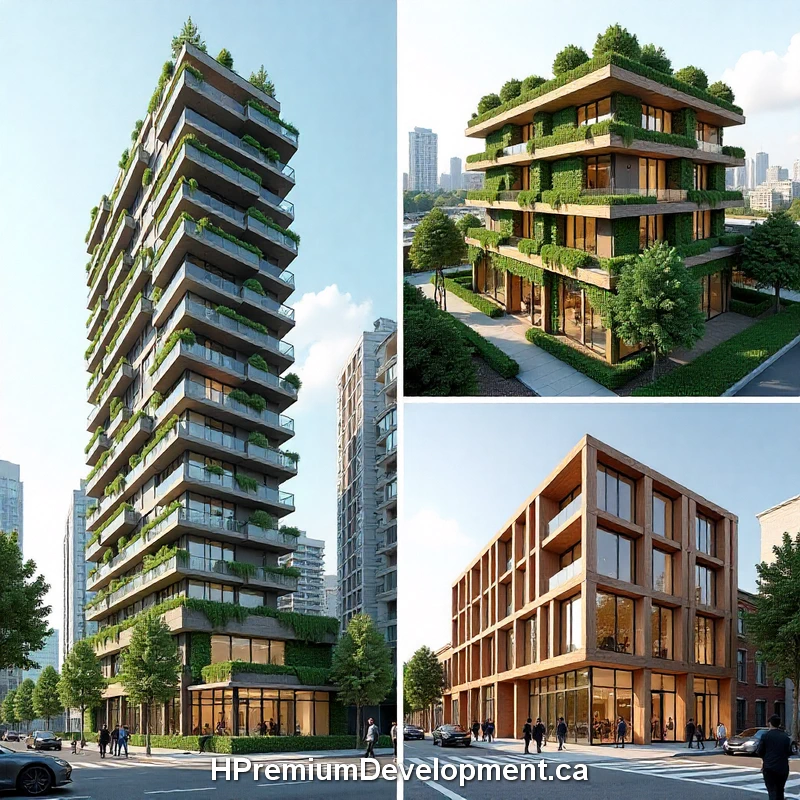
High rise living elevates quality of life in ways traditional homes can’t match. Picture amenity-rich lobbies with infinity pools, state-of-the-art gyms, and communal gardens that foster social connections in an increasingly isolated world. In Toronto, where green space per capita lags behind other major cities, high rises incorporate biophilic design—think vertical forests like those at The Well development, featuring lush atriums that improve air quality and mental health. Sustainability is baked in: many adhere to LEED Gold standards, with solar panels, rainwater harvesting, and EV charging stations reducing carbon footprints by 30-40% compared to low-rise alternatives.
From a urban planning perspective, high rises optimize land use, preserving parks and farmland on the outskirts while curbing sprawl-induced traffic congestion. Transit integration, such as direct TTC subway access in buildings like Aura at College Park, slashes commute times and emissions. For families and professionals alike, the benefits extend to security—24/7 concierge services and keyless entries—and convenience, with ground-floor grocers and cafes creating self-contained ecosystems. Ultimately, high rise development in Toronto isn’t just upward growth; it’s a blueprint for resilient, vibrant communities that prioritize human well-being alongside environmental stewardship.
Navigating Challenges for Maximum Impact
Of course, these perks come with hurdles, like shadow studies to mitigate “canyon effects” on street-level sunlight. Yet, forward-thinking developers counter this through angular designs and setback requirements, ensuring benefits outweigh drawbacks. As Toronto’s population edges toward 7 million in the GTA by 2030, embracing high rise development isn’t optional—it’s essential for a thriving, inclusive future.

The Evolution of Toronto’s Skyline: Icons of Urban Innovation
As Toronto’s high-rise development continues to push the envelope, one can’t ignore the mesmerizing transformation of its skyline—a visual chronicle of the city’s ascent from colonial outpost to cosmopolitan powerhouse. What began as a scattering of modest office blocks in the mid-20th century has ballooned into a forest of gleaming spires, with over 2,000 high-rises now piercing the clouds as of late 2025.
This evolution isn’t random; it’s a deliberate fusion of architectural daring, economic imperatives, and cultural shifts, turning Toronto into Canada’s undisputed vertical capital. High rise development in Toronto has not only redefined horizons but also how residents perceive space, community, and progress. In this section, we’ll trace the skyline’s journey, highlighting pivotal moments and the groundbreaking projects that are etching 2025 into architectural history.
Tracing the Skyline’s Roots: From Flatiron to First Skyscrapers
Toronto’s skyline story kicks off in the Victorian era with the Flatiron Building—affectionately dubbed the “Gooderham”—a wedge-shaped icon from 1892 that hinted at the city’s vertical potential. But it was the 1960s that truly launched the era of high rise development in Toronto, with the arrival of the Toronto-Dominion Centre. This bronze-clad complex, masterminded by Ludwig Mies van der Rohe, introduced International Style modernism, featuring six towers that averaged 30 stories and set a precedent for clustered, efficient urban forms. By the 1970s and ’80s, the condo craze took hold, spurred by land constraints and tax incentives, birthing landmarks like the CN Tower (though not residential, it symbolized ambition at 553 meters) and the Simcoe Place trio.
The 1990s and 2000s marked a maturation phase, with postmodern flourishes in buildings like the Royal Bank Plaza’s golden prisms, blending form and function amid Y2K-era optimism. Fast-forward to the 2010s, and Toronto’s skyline exploded: the City of Toronto approved over 100 new towers, many exceeding 200 meters, fueled by millennial influx and tech booms in areas like King West. This period saw the rise of starchitects—Zaha Hadid’s twisting One Bloor (now nearing full occupancy) and Norman Foster’s sleek designs—infusing global flair into local grit.
By 2020, Toronto had surpassed Chicago in high-rise density within its core, a fact underscored by satellite imagery comparisons showing a tighter, darker cluster of buildings. Today, with zoning reforms like the 2023 Transform TO plan, the skyline’s evolution accelerates, prioritizing density around transit hubs to combat housing crunches.
2025’s Game-Changers: Supertalls Redefining Heights
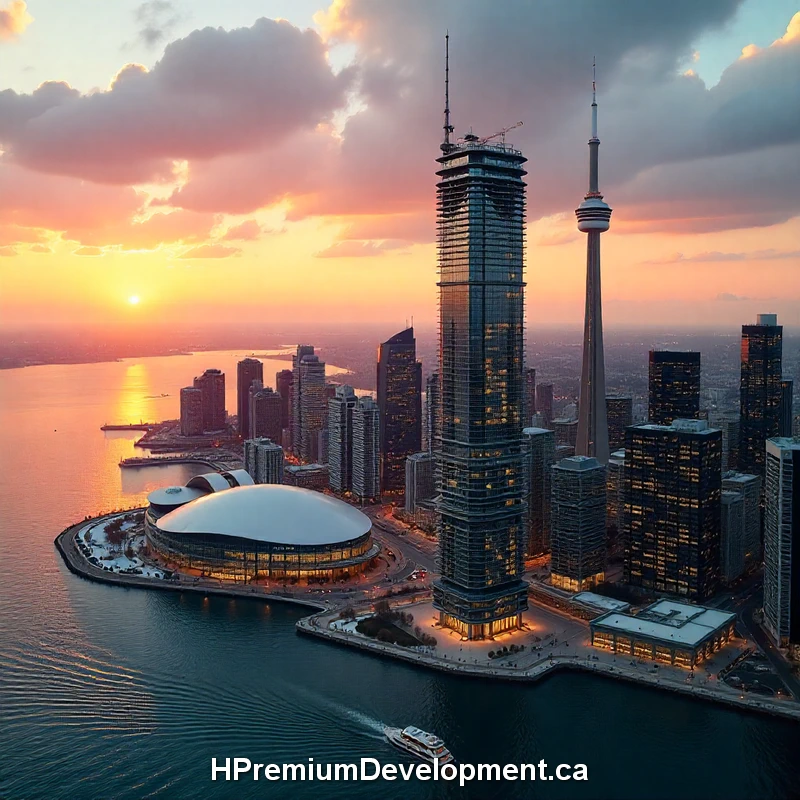
Enter 2025, a banner year for high rise development in Toronto, where supertalls—buildings over 300 meters—are no longer fantasies but concrete realities. Leading the charge is Pinnacle One Yonge’s SkyTower, a 106-story behemoth at 347 meters, poised to claim the title of Canada’s tallest residential skyscraper upon completion in late 2026. Perched on the waterfront, this mixed-use marvel by Hariri Pontarini Architects integrates luxury condos, offices, and public plazas, offering unobstructed Lake Ontario vistas that could fetch $2,000+ per square foot. Construction has surged this year, with the core reaching the 70th floor by October, symbolizing Toronto’s leap into the global supertall league alongside Dubai and New York.
Not to be outshone, Frank Gehry’s Forma at 266 King Street West is emerging as a sculptural standout—an 84-story residential tower with undulating zinc and glass facades that evoke frozen waves, set to top out at 310 meters in 2027. This $1.2 billion project, part of a larger entertainment district redevelopment, promises 1,200 units blending Gehry’s signature whimsy with practical amenities like rooftop farms.
Meanwhile, One Bloor West, Foster + Partners’ 308-meter supertall, is in its final phases, with cladding nearly complete and interiors showcasing smart-home tech for eco-luxury living. These aren’t isolated feats; they’re part of a 2025 pipeline exceeding 50 new towers, including BIG’s terraced towers in the Financial District and a cluster by KPF near Union Station, all vying to stretch Toronto’s silhouette further.
This skyline evolution reflects broader trends: a shift from monolithic boxes to expressive, community-oriented forms that enhance walkability and cultural vibrancy. As cranes dot the horizon—over 200 active sites citywide—Toronto’s high rises are evolving from mere structures into storytelling canvases, narrating a tale of inclusive growth amid challenges like supply chain delays and labor shortages. The result? A skyline that’s not just taller, but smarter, fostering a sense of wonder that draws 10 million visitors annually to gawk at its audacity.
The Rise of Sustainable High-Rises in Toronto: Green Towers for a Greener Future
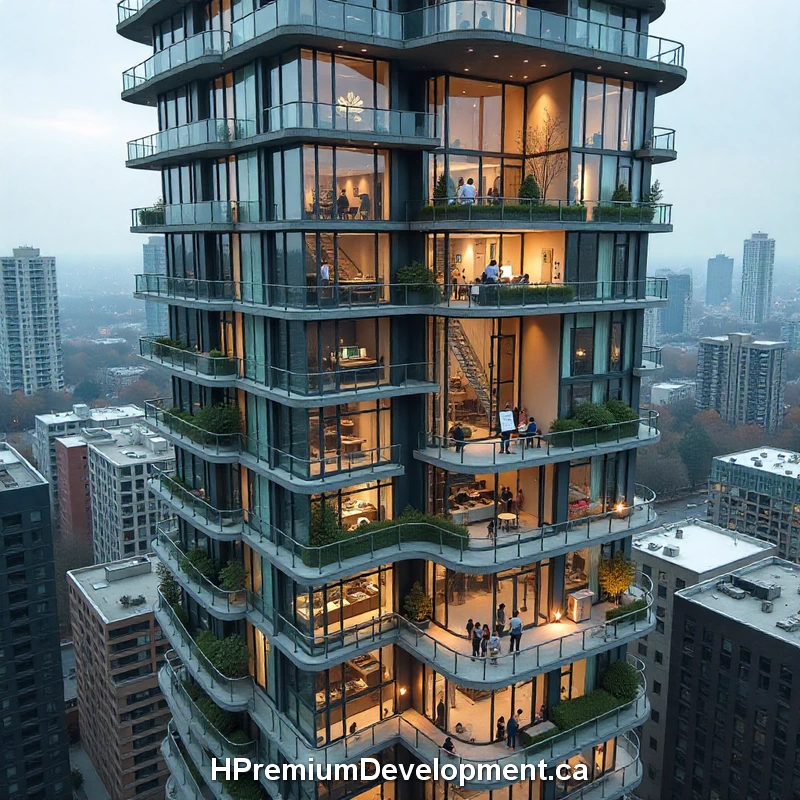
Sustainability has become the North Star guiding high rise development in Toronto, transforming steel-and-glass giants into beacons of environmental stewardship. In a city grappling with climate vulnerabilities—from Lake Ontario flooding to urban heat islands—eco-conscious towers aren’t a luxury; they’re a necessity. As of 2025, over 60% of new high-rises incorporate net-zero standards, up from 30% a decade ago, driven by provincial mandates like the GreenON program and Toronto’s Net Zero by 2040 strategy. This surge in sustainable high-rises in Toronto marries cutting-edge tech with biophilic design, slashing emissions while elevating resident well-being. Here, we explore the innovations propelling this green revolution and spotlight projects leading the way.
Pioneering Technologies and Certifications in Eco-High-Rises
At the core of sustainable high-rise development in Toronto are rigorous certifications like LEED Platinum and Passive House, which demand holistic efficiency. Take energy modeling: advanced BIM software simulates airflow and solar gain pre-construction, optimizing facades with triple-glazed, low-E glass that cuts heating needs by 40%. High-rises now feature geothermal systems—deep-earth heat pumps drawing stable temperatures for HVAC—reducing reliance on fossil fuels. Toronto’s waterfront towers, for instance, tap into the city’s district energy grid, a steam network serving 200+ buildings and preventing 100,000 tons of CO2 annually.
Water conservation is equally vital; greywater recycling in modern high-rises reuses shower runoff for irrigation, conserving up to 50% of usage. Biodiversity boosts come via green roofs and walls: The Daniels Waterfront’s living facades host native pollinators, cooling ambient temperatures by 5°C and filtering stormwater. Smart tech amplifies this—IoT sensors in units adjust lighting and ventilation based on occupancy, yielding 20-30% energy savings.
Moreover, mass timber construction, as seen in hybrid towers like the 18 Yorkville, sequesters carbon during build (one cubic meter absorbs a ton of CO2), challenging concrete’s dominance. These features not only comply with Toronto’s Green Standard Tier 4—requiring 25% better performance than code—but also appeal to eco-savvy millennials, who prioritize sustainability in 70% of condo purchases per recent Urban Land Institute surveys.
Spotlight on 2025’s Sustainable Standouts
No discussion of sustainable high-rises in Toronto is complete without 2025’s trailblazers. The Mira at 222 The Esplanade exemplifies net-zero ambition: this 58-story tower by BDP Quadrangle uses solar arrays covering 40% of its roof, generating enough power for common areas and exporting surplus to the grid. Certified WELL Platinum for health, it includes air-purifying plants and circadian lighting to combat urban stress, with construction wrapping up this fall amid a $800 million budget.
Further west, The United BLDG at 481 University Avenue pushes boundaries with its “regenerative” design—beyond net-zero, it aims to restore ecosystems by integrating urban farms on multiple levels, yielding fresh produce for residents and donating surplus to food banks. This 72-story hybrid, developed by RioCan, employs cross-laminated timber for 20 floors, cutting embodied carbon by 45%, and is on track for Toronto’s first Living Building Challenge certification. On the innovation front, One Yonge’s base building incorporates tidal energy pilots from the lake, a first for Canadian high-rises, while Forma’s Gehry-designed envelope uses recyclable materials, targeting 60% waste diversion during demo.
These projects underscore a paradigm shift: sustainable high-rises in Toronto are economically viable, with green premiums recouped via lower ops costs (up to 15% savings) and higher resale values (10-20% uplift). Yet, challenges persist—retrofitting older towers costs millions, and supply chains for low-carbon materials lag. Still, with incentives like the federal Greener Homes Grant extended into 2026, Toronto’s developers are betting big on green verticality, ensuring high rise development not only reaches new heights but treads lightly on the planet.
High Rise Development in Toronto: Traditional vs. Modern Towers – A Side-by-Side Analysis
As high rise development in Toronto evolves, a fascinating dichotomy emerges between the stalwart traditional towers that laid the groundwork and the avant-garde modern supertalls reimagining the skyline. Traditional high-rises, born in the mid-20th century, prioritized functionality and bold modernism, while today’s iterations emphasize sustainability, tech integration, and resident-centric design. This comparison isn’t just academic—it’s crucial for investors, urban planners, and homebuyers navigating Toronto’s booming market. With over 50 major projects underway in 2025, understanding these shifts highlights how high rise development in Toronto has matured from efficient monoliths to holistic ecosystems.
Traditional towers like the Toronto-Dominion Centre (1967) exemplify post-war pragmatism: steel frames clad in bronze, averaging 30-40 stories, focused on office density amid economic expansion. They revolutionized downtown by clustering commerce but often overlooked energy efficiency and green spaces, leading to retrofits today costing millions.
In contrast, modern supertalls such as the SkyTower at One Yonge—slated for 106 stories and 351.85 meters upon 2026 completion—harness BIM-driven designs and mass timber hybrids, slashing construction emissions by 40%. Projects like Frank Gehry’s Forma (84 stories, 310 meters) add sculptural flair with undulating facades, blending aesthetics with functionality. This evolution addresses past pitfalls: where traditional builds cast long shadows and strained infrastructure, modern ones incorporate setback plazas and seismic tech for resilience.
Economically, traditional towers offered quick ROI through leasing, but modern high-rises command premiums—up to $2,500/sq ft for SkyTower units—thanks to amenities like co-living pods and VR wellness rooms. Yet, challenges persist: modern builds face delays from supply chains, echoing traditional-era labor disputes. Overall, this progression underscores Toronto’s adaptive spirit, with modern towers not supplanting but elevating their predecessors, fostering a skyline that’s denser than Chicago’s core yet more livable.
To visualize the contrasts, here’s a comparison table of iconic examples:
| Aspect | Traditional: TD Centre (1967) | Modern: SkyTower at One Yonge (2026) |
|---|---|---|
| Height/Stories | 223m / 46 stories | 352m / 106 stories |
| Key Materials | Steel frame, bronze cladding | Concrete core, mass timber hybrid |
| Sustainability | Basic retrofits (LEED Silver) | Net-zero ready, LEED Platinum |
| Cost per Sq Ft | $800–1,000 (current resale) | $2,000–2,500 (pre-sale) |
| Amenities | Office lobbies, parking | Rooftop farms, EV hubs, smart tech |
| Urban Impact | Pioneered density | Transit-integrated, biodiversity+ |
This table illustrates how high-rise development in Toronto has pivoted toward innovation, balancing ambition with accountability for a sustainable urban future. You can read Multi Storey Mixed Use Toronto: Transforming Urban Living in the Heart of the City.
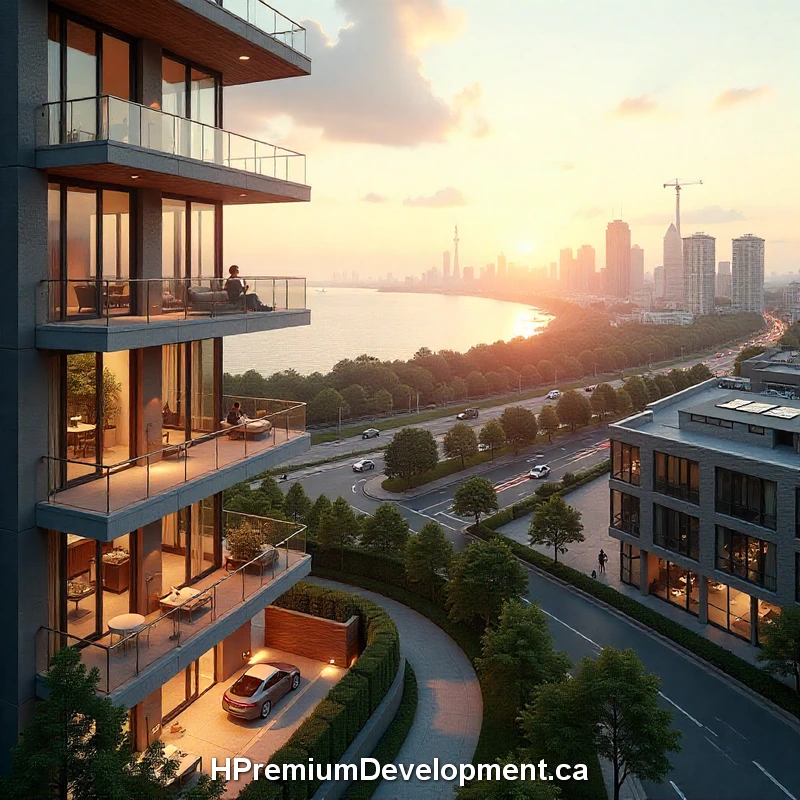
How to Invest in High Rise Development in Toronto: A Step-by-Step Guide for Savvy Buyers
Diving into high rise development in Toronto can be a lucrative venture, whether you’re eyeing pre-construction condos for appreciation or commercial spaces for steady yields. With the market heating up—over 20,000 new units slated for 2025-2027 amid a 3% vacancy rate—strategic investment demands research, timing, and foresight. This guide demystifies the process, offering actionable tips to maximize returns while mitigating risks like zoning delays or interest rate hikes.
Step 1: Research and Market Analysis
Start by pinpointing hotspots: Downtown core and Yonge-Eglinton lead with 40% of new builds, thanks to TTC access and job proximity. Use tools like the Toronto Regional Real Estate Board’s portal or Urbanation reports to track inventory—aim for projects with strong developer pedigrees like Tridel or Great Gulf. Assess demand drivers: Tech influx in the Waterfront pushes values up 15% yearly. Tip: Factor in secondary keywords like “sustainable high-rises Toronto” for eco-premiums; green-certified towers resell 12% higher.
Step 2: Evaluate Projects and Financing
Scour proposals—focus on supertalls like Concord Sky (300m, mixed-use) for diversified income from retail below. Review floor plans for views and layouts; penthouses in Forma could yield 5% rental ROI. Secure pre-approval: With rates at 4.5% in late 2025, lock in fixed mortgages via RBC or TD. For investors, explore REITs like RioCan for passive exposure. Pro tip: Negotiate assignment fees—sellers offload pre-sales at 10-20% discounts during soft markets.
Step 3: Due Diligence and Legal Checks
Hire a lawyer versed in Ontario’s Condominium Act to vet disclosures: Ensure inclusionary zoning (10% affordable units) doesn’t dilute value. Conduct site visits—gauge noise from nearby cranes or transit vibes. Environmental audits are key; post-2023 floods, verify flood-proofing in lakeside towers. Budget for closing costs (2-4% of purchase) and strata fees ($0.80/sq ft average).
Step 4: Close, Manage, and Exit Strategy
Finalize with a 5-10% deposit, then monitor via developer apps for progress updates. Post-occupancy, leverage property managers for 95% occupancy rates. For flips, hold 2-3 years—appreciation hits 8% annually in high-demand zones. Diversify: Mix residential with short-term rentals in tourist-heavy spots like King West.
Common pitfalls? Overleveraging—cap at 70% LTV—or ignoring resale liquidity in oversupplied areas like Scarborough. By following these steps, investors in high rise development in Toronto can ride the wave of urban growth, turning skyline aspirations into tangible wealth. Consult pros for personalized advice and remember: Patience pays in this towering game. You can read Multi Storey Condo Toronto.
FAQs about High Rise Development in Toronto
What is driving the boom in high rise development in Toronto in 2025? The surge stems from population growth (GTA nearing 7 million), housing shortages, and policies like the Official Plan’s intensification targets. Transit expansions, such as Ontario Line, cluster builds around stations, with 50+ towers approved this year alone.
Are sustainable features standard in new Toronto high-rises? Yes, over 70% now target LEED or Toronto Green Standard Tier 3+, including solar panels and green roofs. Projects like Mira exemplify this, cutting energy use by 35% and appealing to eco-buyers.
How much do high-rise condos cost in Toronto? Entry-level units start at $700,000 for 1-beds downtown, escalating to $3M+ for luxury in supertalls like One Bloor West. Expect 5-7% annual appreciation, but factor in $500-800/month fees.
What challenges does high rise development face in Toronto? Key hurdles include construction delays (e.g., labor shortages), community pushback on shadows/heritage, and rising material costs—up 20% post-2024. Yet, incentives like federal rebates mitigate these.
Is now a good time to invest in Toronto high-rises? Absolutely, with yields at 4-6% and low vacancies. Focus on pre-construction for best entry points, but diversify to weather market dips. See hamoon_premium_development in Instagram.